As a young Canadian, you've likely come across the idea of easy passive income, where you can earn money with little to no effort. However, the reality is that building a steady stream of passive income requires time, effort, and patience. It's essential to separate fact from fiction and understand that there's no one-size-fits-all solution to achieving financial freedom.
Many online resources and social media platforms often perpetuate the myth of easy passive income, showcasing overnight success stories and get-rich-quick schemes. In reality, these stories are often exaggerated or misleading, and the majority of people who achieve financial success do so through hard work and dedication. For example, investing in a diversified portfolio of stocks or real estate can generate passive income, but it requires careful planning and research.
To get started on your financial journey, consider the following key principles:
- Set clear financial goals, such as saving for a down payment on a house or paying off student loans
- Develop a budget and track your expenses to understand where your money is going
- Explore different investment options, such as index funds or a tax-free savings account
By following these principles and being mindful of the potential pitfalls of easy passive income, you can set yourself up for long-term financial success. It's also essential to stay informed and adapt to changes in the market and economy.
Building a secure financial future takes time and effort, but with the right mindset and strategies, you can achieve your goals and create a brighter financial future. It's crucial to be patient and persistent, as getting rich quickly is often a myth, and steady progress is usually the result of careful planning and execution. By taking control of your finances and making informed decisions, you can create a stable foundation for your financial future.

The Reality of Passive Income
As a young adult, it's easy to get caught up in the idea of making money without putting in much effort, but the reality of passive income is often misunderstood. Passive income refers to earnings that are generated without actively working for them, such as investments or rental properties. However, many people assume that passive income means making money with zero effort, which is not entirely true.
Common misconceptions about passive income include the idea that it's a quick fix or a way to get rich fast, but in reality, it often requires some initial setup and maintenance. For instance, investing in dividend-paying stocks or peer-to-peer lending can provide a relatively stable source of passive income, but it's essential to do your research and understand the risks involved. It's also important to note that passive income often requires some ongoing effort to ensure it continues to generate income.
Some examples of realistic passive income streams include:
- Dividend-paying stocks, which distribute a portion of the company's profits to shareholders
- Peer-to-peer lending, which allows you to lend money to individuals or businesses and earn interest on your investment
- Rental properties, which can provide a steady stream of income through rent payments
These types of investments can provide a relatively stable source of passive income, but they often require some initial effort to set up and manage.
To set up sustainable passive income sources, you'll need to put in some initial effort, such as researching investments, setting up accounts, and monitoring your progress. For example, if you're interested in investing in dividend-paying stocks, you'll need to research different companies, set up a brokerage account, and deposit funds to start investing. It's also essential to have a long-term perspective and be patient, as building a sustainable passive income stream can take time.
In terms of practical tips, it's a good idea to start small and gradually build up your passive income streams over time. You can begin by investing a portion of your savings or income each month, and then gradually increase the amount as your wealth grows. Additionally, it's essential to diversify your investments to minimize risk and ensure that you have a stable source of passive income.

Building Wealth Through Side Hustles
As a young Canadian, having a side hustle can be a great way to earn extra money and build wealth. Popular side hustles include freelancing, where you can offer services like writing, graphic design, or social media management on platforms like Upwork or Fiverr. This allows you to monetize your skills and work on your own schedule.
For those who enjoy creating products, selling items online through platforms like Etsy or eBay can be a lucrative side hustle. You can start by selling items you no longer need or creating handmade products, and then scale up your business as you gain more experience. Online marketplaces make it easy to reach a wide audience and start selling quickly.
To turn your side hustle into a passive income stream, consider creating and selling an online course teaching others a skill you have mastered. You can use platforms like Udemy or Teachable to host your course, and once it's created, you can earn money from sales without much additional effort. This can be a great way to build wealth over time, as you can continue to sell your course with minimal ongoing work.
Some other ideas for side hustles include:
- Renting out a spare room on Airbnb
- Selling stock photos on platforms like Shutterstock
- Delivering food or packages for companies like Uber Eats or Amazon Flex
These side hustles can be a great way to earn extra money, but it's also important to consider the tax implications of your earnings.
When managing your side hustle income, it's essential to be tax efficient to minimize your tax liability. This can include setting aside money for taxes, claiming deductions for business expenses, and taking advantage of tax credits for entrepreneurs. By being mindful of tax efficiency, you can keep more of your hard-earned money and build wealth faster. You can also consult with a tax professional to ensure you're taking advantage of all the tax savings available to you.

Investing for Passive Income
When it comes to building wealth, investing for passive income is a great way to start. Index funds and real estate investment trusts (REITs) are two popular investment vehicles that can help you get started. These investment options provide a relatively low-risk way to earn passive income, and they can be a good addition to a diversified portfolio.
Investing in index funds, for example, allows you to own a small piece of the entire market, which can help spread out risk. This type of investment typically requires minimal effort and can be a good option for those who are new to investing. By investing in index funds, you can earn passive income through dividend payments and interest.
Compound interest is another important concept to understand when investing for passive income. Essentially, compound interest is the idea that the interest earned on your investment can be reinvested to earn even more interest. Over time, this can have a significant impact on your investment returns, and it's a key factor to consider when investing for the long-term.
Some key benefits of compound interest include:
- Increased investment returns over time
- Reduced risk through consistent investment
- Potential for long-term wealth creation
By taking advantage of compound interest, you can potentially earn more passive income from your investments over time.
Dollar-cost averaging is a strategy that can help reduce investment risk by investing a fixed amount of money at regular intervals. This approach can help you smooth out market fluctuations and avoid trying to time the market. For example, you could invest $100 per month in a diversified portfolio, regardless of the market's performance.
This approach can help you:
- Reduce the impact of market volatility
- Avoid emotional decision-making
- Stay consistent with your investment goals
By using dollar-cost averaging, you can make investing for passive income a more manageable and less intimidating process.
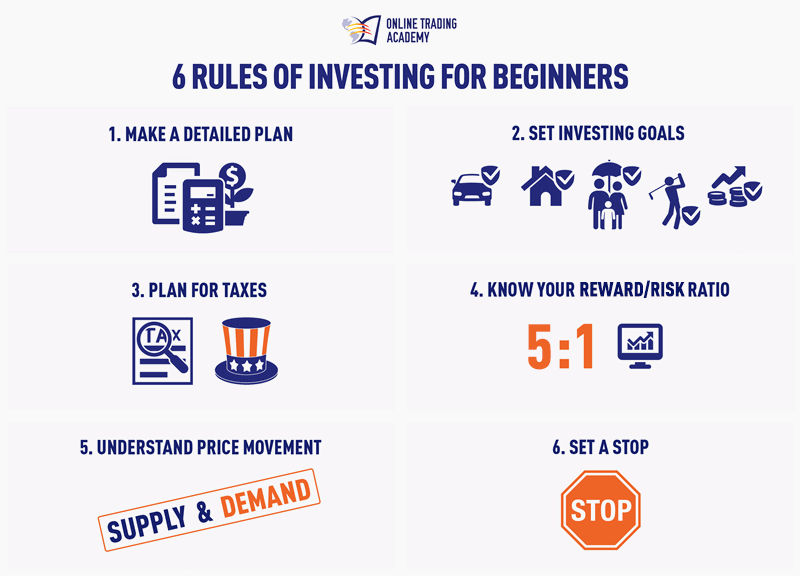
Avoiding Get-Rich-Quick Schemes
As a young investor, it's essential to be aware of the dangers of get-rich-quick schemes and Ponzi schemes that promise unusually high returns with little to no risk. These schemes often target inexperienced investors who are eager to make a quick profit, but they can result in significant financial losses. For instance, a scheme may promise a 20% monthly return, which is unrealistic and likely a scam.
To avoid falling victim to such schemes, it's crucial to research and vet investment opportunities thoroughly. This includes verifying the credentials of the investment company, reading reviews and testimonials from other investors, and understanding the underlying investment strategy. A good starting point is to check if the company is registered with the relevant regulatory authorities.
When evaluating an investment opportunity, consider the following red flags:
- Guaranteed high returns with little to no risk
- Pressure to invest quickly, without allowing time for research
- Lack of transparency about the investment strategy or fees
- Unregistered or unlicensed investment companies
These warning signs can help you identify potential get-rich-quick schemes and avoid them.
Patience and a long-term perspective are essential in achieving financial goals. Rather than seeking quick profits, focus on building a diversified investment portfolio that aligns with your risk tolerance and financial objectives. This may involve investing in a mix of low-risk bonds, dividend-paying stocks, and index funds, and holding onto them for an extended period.
By adopting a long-term approach, you can ride out market fluctuations and avoid making impulsive decisions based on short-term market volatility. For example, if you had invested $1,000 in a total stock market index fund 10 years ago, it could be worth around $2,500 today, assuming an average annual return of 7%. This demonstrates the power of compounding and the importance of perseverance in investing.
Ultimately, investing is a marathon, not a sprint. By being cautious, doing your research, and taking a patient approach, you can achieve your financial goals and build a secure financial future. Remember to stay informed, stay disciplined, and avoid the temptation of get-rich-quick schemes that promise overnight riches.

Creating a Budget for Financial Freedom
Achieving financial freedom is a dream for many, and it all starts with creating a budget. A well-crafted budget helps you prioritize your spending, make conscious financial decisions, and build wealth over time. By allocating your income effectively, you can ensure that you're saving for the future and investing in your goals.
To create a budget, start by tracking your income and expenses to understand where your money is going. Make a list of your necessary expenses, such as rent, utilities, and groceries, and then identify areas where you can cut back on unnecessary spending. This will help you determine how much you can allocate towards savings and investments.
The 50/30/20 rule is a simple and effective budgeting framework to follow. This rule suggests that:
- 50% of your income goes towards necessary expenses, such as rent, utilities, and groceries
- 30% towards discretionary spending, such as entertainment and hobbies
- 20% towards saving and investing, such as retirement funds and emergency savings
This framework provides a clear guideline for allocating your income and ensures that you're prioritizing your financial goals.
When creating your budget, consider your short-term and long-term goals, such as paying off debt, building an emergency fund, or saving for a down payment on a house. Be sure to review and adjust your budget regularly to ensure you're on track to meet your goals. For example, you may need to adjust your budget to account for changes in income or expenses, such as a pay raise or a move to a new apartment.
In addition to the 50/30/20 rule, consider implementing other budgeting strategies, such as automating your savings and investments, using the envelope system to track your expenses, or taking advantage of tax-advantaged retirement accounts. By following these tips and staying committed to your budget, you can achieve financial freedom and build a brighter financial future.

Frequently Asked Questions (FAQ)
What is the fastest way to make passive income?
When it comes to generating passive income, many people are looking for a quick fix or a get-rich-quick scheme. However, the reality is that building sustainable passive income takes time and effort. It's essential to have realistic expectations and focus on making steady progress over time.
One of the most critical factors in creating passive income is starting early and being consistent. By beginning to invest or build passive income streams as soon as possible, you can take advantage of compound interest and long-term growth. For example, investing a fixed amount of money each month in a dividend-paying stock or a real estate investment trust (REIT) can lead to significant returns over time.
Some popular ways to generate passive income include:
- Investing in dividend-paying stocks or index funds
- Creating and selling online courses or ebooks
- Renting out a spare room on Airbnb or investing in real estate
These options require some initial effort, but they can provide a relatively steady stream of income over time.
To achieve success in generating passive income, it's crucial to be patient and disciplined. Avoid getting caught up in get-rich-quick schemes or investing in opportunities that seem too good to be true. Instead, focus on building a solid foundation and making steady progress over time. By doing so, you can create a sustainable source of passive income that will serve you well in the long run.
In terms of practical tips, it's essential to educate yourself on personal finance and investing. This can include reading books, taking online courses, or seeking advice from a financial advisor. By gaining a deeper understanding of how money works, you can make informed decisions and create a personalized plan for generating passive income.
How much money do I need to start investing?
When it comes to investing, many people assume they need a large sum of money to get started. However, this is not the case, as many investment platforms offer low or no minimum balance requirements. This means you can start investing with as little as $10 or $100, and still have access to a range of investment options.
Some popular investment platforms, such as robo-advisors and micro-investing apps, allow you to start investing with small amounts of money. These platforms often have low or no fees, making it easy to get started with investing, even on a tight budget. For example, you can start investing with just $5 using a micro-investing app that rounds up your purchases and invests the change.
To get started, consider the following options:
- Micro-investing apps that allow you to invest small amounts of money into a diversified portfolio
- Robo-advisors that offer low-cost index funds and ETFs with no minimum balance requirements
- Online brokerages that allow you to buy individual stocks or ETFs with low or no fees
These options make it easy to start investing with any amount of money, and can help you build wealth over time. By starting small and being consistent, you can make progress towards your financial goals, even if you don't have a lot of money to invest.
It's also important to remember that investing is a long-term game, and it's not about how much money you start with, but about being consistent and patient. You can start with a small amount of money and gradually increase your investments over time, as your income and financial situation change. This will help you build a habit of investing and make progress towards your financial goals.
Are all passive income streams taxable?
When it comes to passive income streams, many people wonder if they are required to pay taxes on their earnings. Most passive income streams are indeed taxable, but the tax implications can vary depending on the type of investment and individual circumstances. For instance, rental income from a property is typically considered taxable, while certain types of investments, such as municipal bonds, may be tax-exempt.
The type of tax applied to passive income streams also depends on the investment vehicle. For example, dividends from stocks are usually taxed as ordinary income, while capital gains from selling investments are taxed at a different rate. It's essential to understand the tax implications of each investment to make informed decisions and minimize tax liabilities.
Some common types of passive income streams and their tax implications include:
- Dividend-paying stocks: taxed as ordinary income
- Rental income: taxed as ordinary income
- Peer-to-peer lending: taxed as ordinary income
- Capital gains from selling investments: taxed at a capital gains rate
It's crucial to keep accurate records of your passive income streams and consult with a tax professional to ensure you are meeting your tax obligations and taking advantage of available tax deductions.
In addition to understanding the tax implications of passive income streams, it's also important to consider the individual circumstances that may affect your tax situation. For example, if you are investing through a tax-deferred retirement account, such as a 401(k) or IRA, the tax implications may be different than if you were investing in a taxable brokerage account. By considering these factors and seeking professional advice, you can make informed decisions about your passive income streams and minimize your tax liabilities.