As a young adult, managing finances effectively is crucial for long-term stability and security. Earning passive income can be a game-changer, providing a steady stream of revenue without requiring direct involvement. By leveraging passive income opportunities, individuals can pay off debts, build savings, and invest in their future.
Passive income can come in various forms, such as investing in dividend-paying stocks, renting out a spare room on Airbnb, or creating and selling digital products. For instance, a student can create an online course teaching a skill they excel in, like photography or coding, and sell it on platforms like Udemy or Skillshare. This way, they can earn money while focusing on their studies or other pursuits.
Some benefits of earning passive income include:
- Financial freedom and security
- Reduced stress and increased peace of mind
- Opportunities to pursue passions and interests without financial burdens
By exploring passive income opportunities, young adults can set themselves up for success and create a brighter financial future. With the right mindset and strategies, anyone can start building a passive income stream and reap its rewards. Whether it's through investing, creating digital products, or renting out a spare room, the possibilities are endless, and the benefits are well worth exploring.

Understanding Passive Income
Passive income is a type of earnings that requires little to no effort to maintain, differing significantly from active income which demands constant involvement. For young adults, a common example of passive income is renting out a spare room on Airbnb, while active income would be working as a freelance writer or tutor. This distinction is crucial in understanding how to build wealth over time.
The benefits of passive income are numerous, including financial freedom and reduced stress, as it provides a steady stream of income without requiring a significant time commitment. With passive income, individuals can pursue their passions and interests without being tied to a 9-to-5 job. For instance, investing in dividend-paying stocks or creating and selling an online course can generate passive income.
To get started with passive income, it's essential to set clear financial goals, such as saving for a down payment on a house or paying off student loans. Assessing your skills and interests is also crucial, as it will help you identify potential passive income opportunities, such as:
- Investing in real estate investment trusts (REITs)
- Creating and selling ebooks or other digital products
- Starting a blog or YouTube channel with advertising revenue
By understanding your strengths and weaknesses, you can focus on building passive income streams that align with your goals and skills.
When evaluating potential passive income opportunities, consider the initial investment required, the potential returns, and the level of maintenance needed. For example, investing in index funds or ETFs typically requires a lower initial investment and less maintenance compared to investing in real estate. By doing your research and starting small, you can begin building a passive income portfolio that generates wealth over time.
Ultimately, achieving financial freedom through passive income requires patience, discipline, and a willingness to learn and adapt. By taking the first step and exploring passive income opportunities, you can set yourself up for long-term financial success and reduce your reliance on active income. With the right mindset and strategy, you can create a steady stream of passive income that supports your lifestyle and goals.

Investing for Passive Income
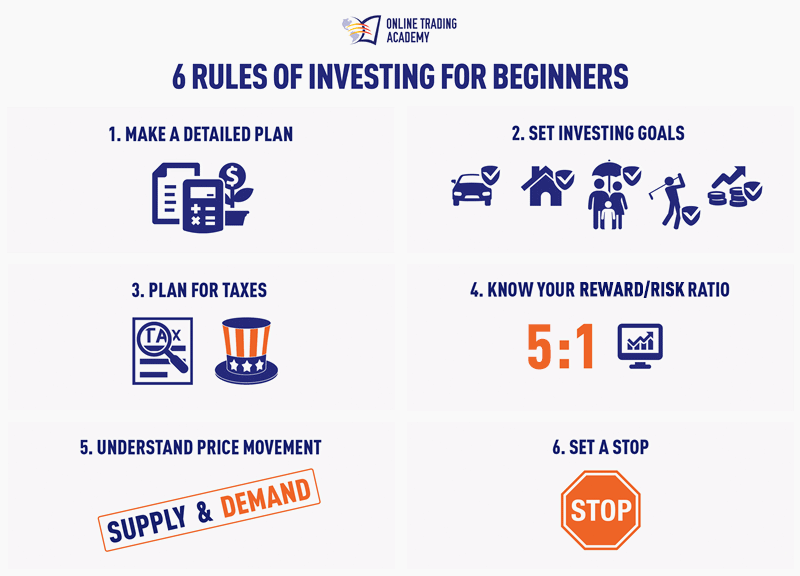
Investing for passive income is a great way to earn money without actively working for it. By putting your money into investments such as stocks, bonds, or real estate investment trusts (REITs), you can generate a steady stream of income over time. For example, investing in dividend-paying stocks can provide a regular source of income through dividend payments.
To get started with investing, you don't need a lot of money. Micro-investing apps such as Acorns or Stash allow you to invest small amounts of money into a diversified portfolio, making it easy to begin with as little as $5. Additionally, robo-advisors like Betterment or Wealthfront offer low-cost investment management and can help you get started with a small initial investment.
When it comes to investing, diversification is key to minimizing risk and maximizing returns. This means spreading your investments across different asset classes, such as stocks, bonds, and real estate. Here are some tips for diversifying your investments:
- Invest in a mix of low-risk and high-risk investments to balance out your portfolio
- Consider investing in index funds or ETFs, which track a specific market index, such as the S&P 500
- Look into real estate investment trusts (REITs), which allow you to invest in real estate without directly owning physical properties
Starting small and being consistent is the best way to build wealth over time. Even investing a few hundred dollars per month can add up to a significant amount over the years. By taking advantage of compound interest and dollar-cost averaging, you can grow your investments and increase your passive income over time.
It's also important to educate yourself on the different types of investments and their associated risks and rewards. This can help you make informed decisions and avoid costly mistakes. By doing your research and seeking out advice from financial experts, you can create a personalized investment plan that meets your financial goals and helps you achieve financial freedom.
Digital Passive Income Streams
Creating digital products is a great way to earn passive income, and it can be as simple as writing an ebook or creating a course to teach others a skill. For example, if you're knowledgeable about personal finance, you could write an ebook on budgeting tips or create a course on investing for beginners. This type of product can be sold on your own website or through platforms like Amazon Kindle Direct Publishing.
One popular type of digital product is software, which can be created to solve a specific problem or make a task easier. To get started, you'll need to identify a need in the market and have some programming skills, or hire a developer to help you create the software. Once your software is created, you can sell it on your website or through a marketplace like the Apple App Store.
Another way to earn passive income is through affiliate marketing, which involves promoting products or services of other companies and earning a commission on sales.
- Choose a niche or area of interest to focus on, such as fitness or finance
- Research affiliate programs that offer products in your niche, such as Amazon Associates or Commission Junction
- Join the affiliate program and get your unique referral link to share with others
You can share your referral link on social media, your website, or through email marketing, and earn a commission on any sales that come from your link.
Creating a YouTube channel or podcast can also be a great way to earn passive income, through monetization strategies like ads, sponsorships, and affiliate marketing. To get started, you'll need to choose a topic or niche to focus on, and create high-quality content that engages your audience. For example, you could create a YouTube channel focused on personal finance, or a podcast on entrepreneurship, and monetize it with ads or sponsorships.
To monetize your YouTube channel or podcast, you can
- Enable ads on your YouTube channel, and earn money from views and clicks
- Reach out to brands to sponsor your podcast or YouTube channel, and earn money from sponsorships
- Use affiliate marketing to promote products or services related to your niche, and earn a commission on sales
By creating a large and engaged audience, you can earn significant passive income from your YouTube channel or podcast, and build a successful online business.

Renting Out Assets for Passive Income
Renting out assets can be a lucrative way to generate passive income, and with the rise of peer-to-peer rental platforms, it's easier than ever to get started. For those with an extra room in their home, consider renting it out on Airbnb, which can be a great way to earn some extra money, especially during peak travel seasons. This can be a relatively low-maintenance way to earn some extra cash, as you can set your own schedule and rates.
If you have a whole property that you're not using, you can also consider renting it out on VRBO, which can be a great way to earn some extra income, especially if you live in a popular tourist destination. This can be a bit more involved than renting out a spare room, but it can also be more lucrative. For example, if you have a vacation home that you only use a few weeks out of the year, you can rent it out to other travelers and earn some extra money.
In addition to renting out property, you can also rent out other assets, such as your car or bike. Platforms like Turo and Spinlister make it easy to rent out your vehicle to others, which can be a great way to offset the costs of ownership. Here are some popular options:
- Renting out a car on Turo, which can be a great way to earn some extra money, especially if you live in a city with high demand for car rentals
- Renting out a bike on Spinlister, which can be a great way to earn some extra money, especially if you live in a city with a high demand for bike rentals
These platforms handle the logistics and provide insurance, making it easy to get started.
If you have other assets, such as tools or equipment, you can also rent them out on peer-to-peer rental platforms. This can be a great way to earn some extra money, especially if you have high-value items that you only use occasionally. For example, if you have a power tool that you only use for a few projects per year, you can rent it out to others and earn some extra money. Some popular platforms for renting out tools and equipment include:
- Peer-to-peer rental platforms, such as Fat Llama or KitSplit, which allow you to rent out a wide range of assets, from tools to equipment to vehicles
- Specialized platforms, such as BabyQuip or Rent Not Buy, which allow you to rent out baby gear or other specialized equipment
These platforms make it easy to connect with others who are looking to rent your assets, and they often provide insurance and other protections to help you feel secure.

Creating Intellectual Property
Creating intellectual property can be a lucrative way to earn passive income, and it's more accessible than you think. If you have a talent for music, photography, or art, you can create and license your work for use in various projects, such as advertisements, films, or websites. For instance, a photographer can license their photos to a stock image website, earning a fee each time their photo is downloaded.
To get started, you'll need to create a portfolio of your work and research potential licensing opportunities. You can use online platforms like Shutterstock or AudioJungle to showcase and sell your intellectual property. These platforms handle the licensing process, making it easy for you to focus on creating more content.
Another option is to create an online course teaching a skill or hobby, which can be a great way to monetize your expertise. You can use platforms like Udemy or Teachable to host your course, and earn passive income from course sales. Some popular course topics include photography, graphic design, or cooking.
When creating an online course, consider the following tips:
- Validate your course idea by researching your target audience and competition
- Create high-quality video lessons and engaging course materials
- Offer support and feedback to your students to build a positive reputation
By following these tips, you can create a successful online course that generates passive income and helps you build a loyal following.
Protecting your intellectual property rights is crucial to avoid unauthorized use and ensure you receive fair compensation. You can register your work with the relevant authorities, such as the U.S. Copyright Office, to establish ownership and protection. Additionally, when negotiating licensing agreements, be sure to clearly define the terms of use, territory, and duration to avoid disputes.
When negotiating licensing agreements, consider the following:
- Research the market rate for similar licenses to determine a fair fee
- Clearly outline the terms of use, including any restrictions or limitations
- Establish a process for resolving disputes or terminating the agreement
By being proactive and informed, you can protect your intellectual property and negotiate fair licensing agreements that benefit both you and the licensee.
Frequently Asked Questions (FAQ)
What is the easiest way to start earning passive income?
To begin earning passive income, it's essential to start with a solid foundation. Opening a high-yield savings account is a great way to do this, as it allows you to earn interest on your deposited funds with minimal effort. This can be a low-risk option for those who are new to investing and want to dip their toes into the world of passive income.
Investing in a robo-advisor is another easy way to start earning passive income. Robo-advisors are automated investment platforms that manage your investments for you, making it easy to get started with a small amount of money. They often have low fees and require minimal effort, making them a great option for beginners.
Some popular options for earning passive income include:
- High-yield savings accounts, such as those offered by online banks like Ally or Marcus
- Robo-advisors, such as Betterment or Wealthfront
- Index funds or ETFs, which can be invested in through a brokerage account
These options are all relatively easy to set up and require minimal maintenance, making them great choices for those who are new to investing and want to start earning passive income.
When getting started with passive income, it's essential to remember that it's a long-term game. It may take some time to see significant returns, but with patience and consistency, you can build a steady stream of passive income. By starting small and being consistent, you can set yourself up for success and begin earning passive income with minimal effort.
How much money do I need to start investing in stocks or real estate?
When it comes to investing in stocks or real estate, many people assume they need a large sum of money to get started. However, this is not necessarily the case, as some investment apps and platforms offer micro-investing options or low minimum balance requirements. For instance, apps like Acorns or Robinhood allow you to start investing with as little as $1 or $5.
To begin investing, you can explore various platforms that cater to different investment styles and budgets. Some popular options include Stash, which requires a minimum investment of just $5, or Fidelity, which has no account minimums for its brokerage accounts. These platforms make it easy to start small and gradually increase your investment amount over time.
Here are some ways you can start investing with little money:
- Micro-investing apps, such as Acorns or Digit, which invest small amounts of money into a diversified portfolio
- Low-cost index funds or ETFs, which offer broad market exposure with minimal fees
- Real estate investment trusts (REITs), which allow you to invest in real estate with lower minimums than traditional property investing
Investing small amounts regularly can add up over time, thanks to the power of compound interest. For example, investing just $10 per week can result in a significant nest egg after a few years, especially if you earn a decent return on your investments. By starting small and being consistent, you can make progress towards your long-term financial goals.
As you begin your investment journey, it's essential to remember that it's not about the amount of money you start with, but rather your ability to be consistent and patient. By taking advantage of low-minimum investment options and making regular contributions, you can set yourself up for success and work towards achieving your financial goals.
Are passive income streams taxable?
As a graduate looking to build wealth, it's essential to understand the tax implications of passive income streams. Yes, passive income streams are taxable, but the tax implications vary depending on the type of income and individual circumstances. This means that the amount of taxes you owe will depend on the source of your passive income and your overall financial situation.
The type of passive income you earn plays a significant role in determining its tax implications. For instance, rental income from a property is typically taxed as ordinary income, while dividends from stocks may be eligible for a lower tax rate. It's crucial to understand the tax rules surrounding your specific type of passive income to avoid any surprises during tax season.
Here are some common types of passive income and their tax implications:
- Rental income: taxed as ordinary income
- Dividends: may be eligible for a lower tax rate, known as a qualified dividend
- Interest income: taxed as ordinary income, but may be subject to a lower tax rate for certain types of accounts, such as a high-yield savings account
- Capital gains: taxed at a lower rate than ordinary income, but only if you've held the investment for more than a year
To minimize your tax liability, it's a good idea to consult with a tax professional or financial advisor who can help you navigate the complexities of passive income taxation.
In addition to understanding the tax implications of your passive income streams, it's also important to keep accurate records of your income and expenses. This will help you to accurately report your income on your tax return and take advantage of any deductions or credits you may be eligible for. By being proactive and staying informed, you can minimize your tax liability and maximize your passive income streams.