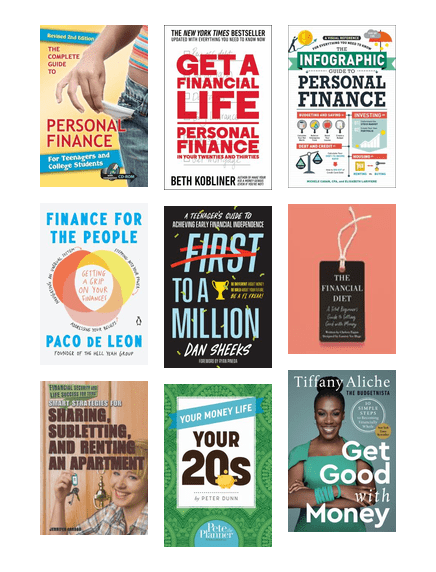
As a young adult, taking control of your finances can seem daunting, but it's a crucial step towards securing your financial future. With so many resources available, it can be hard to know where to start. By reading the right personal finance books, you can gain a solid understanding of how to manage your money effectively.
When it comes to personal finance, knowledge is power, and reading the right books can help you make informed decisions about your financial life. Some essential topics to look for in personal finance books include budgeting, saving, investing, and debt management. For instance, learning how to create a budget and track your expenses can help you identify areas where you can cut back and allocate your money more wisely.
To get started, consider exploring books that focus on financial literacy and stability, such as those that offer practical advice on paying off student loans, building credit, and navigating the world of investing. Some popular books for young adults include:
- "The Total Money Makeover" by Dave Ramsey
- "Your Money or Your Life" by Vicki Robin and Joe Dominguez
- "The Automatic Millionaire" by David Bach
These books offer valuable insights and strategies for taking control of your finances and achieving long-term stability. By reading and applying the principles outlined in these books, you can set yourself up for financial success and create a brighter future.
Understanding Budgeting and Saving
When it comes to managing finances effectively, having a solid understanding of budgeting and saving is crucial. A great place to start is with 'The Total Money Makeover' by Dave Ramsey, which offers a straightforward approach to debt reduction and budgeting. By following Ramsey's 7-step plan, individuals can create a personalized budget that helps them get out of debt and build wealth.
To create a budget, start by tracking your income and expenses to see where your money is going. This will help you identify areas where you can cut back and allocate funds more efficiently. For example, you can use the 50/30/20 rule, where 50% of your income goes towards necessities, 30% towards discretionary spending, and 20% towards saving and debt repayment.
In 'Your Money or Your Life' by Vicki Robin and Joe Dominguez, the authors emphasize the importance of aligning your spending with your personal values. This involves taking a closer look at your spending habits and making conscious decisions about how you want to use your money. By doing so, you can create a budget that not only helps you achieve financial stability but also brings you a sense of fulfillment and purpose.
Here are some actionable tips from these books on creating a budget and starting a savings plan:
- Start by setting clear financial goals, such as paying off debt or building an emergency fund
- Create a budget that accounts for all your income and expenses, and regularly review it to make adjustments as needed
- Prioritize needs over wants, and make sure your spending aligns with your values and goals
- Automate your savings by setting up automatic transfers from your checking account to your savings or investment accounts
By following these tips and strategies, you can take control of your finances and make progress towards achieving financial freedom. Remember, budgeting and saving are long-term processes that require patience, discipline, and persistence.
To get started, consider implementing small changes to your daily habits, such as bringing your lunch to work instead of buying it or canceling subscription services you don't use. These small changes can add up over time and help you build momentum towards your financial goals. As you become more comfortable with budgeting and saving, you can continue to refine your approach and make adjustments as needed to achieve long-term financial success.
Investing and Wealth Creation
As a beginner in the world of investing, it's essential to start with the basics. A great resource to begin with is "A Random Walk Down Wall Street" by Burton G. Malkiel, which provides an excellent overview of investing and market trends. This book offers a comprehensive guide to understanding the stock market and making informed investment decisions.
The book explains key concepts such as diversification, risk management, and the importance of a long-term investment strategy. By understanding these concepts, investors can make more informed decisions and avoid common pitfalls. For example, diversifying a portfolio can help reduce risk and increase potential returns over the long term.
In addition to "A Random Walk Down Wall Street", another highly recommended book is "The Little Book of Common Sense Investing" by John C. Bogle. This book focuses on the benefits of index fund investing, which can be a low-cost and effective way to invest in the stock market. Index funds allow investors to track a specific market index, such as the S&P 500, and can provide broad diversification and potentially lower fees.
Some key concepts from "The Little Book of Common Sense Investing" include:
- Dollar-cost averaging: investing a fixed amount of money at regular intervals, regardless of the market's performance
- Low-cost investing: minimizing fees and expenses to maximize returns
- Long-term focus: avoiding emotional decisions based on short-term market fluctuations
By following these principles, investors can create a solid foundation for their investment strategy.
For those with limited funds, starting to invest can seem daunting. However, it's easier than ever to get started with little money. Many brokerages now offer low-cost or no-cost trading, and some even allow investors to buy fractions of shares. By starting small and being consistent, investors can begin to build wealth over time.
Some practical tips for investing with little money include:
- Setting up a monthly investment plan to transfer a fixed amount of money into a brokerage account
- Taking advantage of tax-advantaged accounts such as IRAs or 401(k)s
- Using a robo-advisor or micro-investing app to get started with small amounts of money
By following these tips and staying informed, investors can make progress towards their financial goals and create a brighter financial future.

Achieving Financial Independence
Achieving financial independence is a dream for many, and it's more attainable than you think. JL Collins' book, "The Simple Path to Wealth", offers a straightforward approach to reaching financial freedom, emphasizing the importance of saving and investing aggressively. By following Collins' advice, you can create a roadmap to early retirement and live life on your own terms.
One key takeaway from Collins' book is the power of compound interest and the benefits of starting to save and invest early. For example, if you start saving $500 per month at age 25, you could have over $1 million by the time you're 50, thanks to the magic of compound interest. This strategy can help you build wealth over time and achieve financial independence.
Ramit Sethi's book, "I Will Teach You To Be Rich", offers practical advice for young adults on career development and smart money moves. Sethi emphasizes the importance of finding a high-paying job and negotiating a good salary, as well as avoiding debt and building credit. By following Sethi's guidance, you can set yourself up for financial success and create a solid foundation for achieving financial independence.
To achieve financial independence, consider the following strategies:
- Start a side hustle to increase your income and savings potential
- Aggressively save and invest, aiming to save at least 20% of your income
- Invest in a tax-advantaged retirement account, such as a 401(k) or IRA
- Pay off high-interest debt and avoid taking on new debt
- Build multiple income streams to reduce financial risk and increase wealth
These strategies can help you build wealth over time and achieve financial independence, allowing you to live life on your own terms.
In addition to these strategies, it's essential to develop healthy financial habits, such as tracking your expenses and creating a budget. By taking control of your finances and making smart money moves, you can set yourself up for long-term financial success and achieve financial independence. For example, you can use the 50/30/20 rule to allocate your income, spending 50% on necessities, 30% on discretionary spending, and 20% on saving and debt repayment.
Managing Debt and Credit
When it comes to managing debt and credit, having a solid strategy in place is key. The Debt Snowball strategy, popularized by Dave Ramsey in "The Total Money Makeover", involves paying off debts one by one, starting with the smallest balance first. This approach can be highly effective, as it provides a sense of accomplishment and momentum as each debt is paid off.
For example, let's say you have three credit cards with balances of $500, $1,000, and $2,000, and you pay the minimum payment on each card every month. By using the Debt Snowball strategy, you would focus on paying off the $500 balance first, while making minimum payments on the other two cards. Once the $500 balance is paid off, you would then focus on the $1,000 balance, and so on.
In addition to the Debt Snowball strategy, automating your finances and debt repayment can also be a game-changer. As discussed in "The Automatic Millionaire" by David Bach, setting up automatic transfers from your checking account to your savings and debt repayment accounts can help you stay on track and make progress towards your financial goals. By automating your finances, you can ensure that you never miss a payment or fall behind on your debt repayment.
Some tips for automating your finances include:
- Setting up automatic transfers from your checking account to your savings and debt repayment accounts
- Using bill pay services to pay your bills on time
- Taking advantage of employer-matched retirement accounts, such as 401(k) or IRA
Negotiating with creditors can also be an effective way to manage debt and improve your credit score. By contacting your creditors and explaining your financial situation, you may be able to negotiate a lower interest rate or a temporary reduction in payments. It's also important to monitor your credit report and dispute any errors or inaccuracies that you find.
To improve your credit score, it's essential to make on-time payments and keep your credit utilization ratio low. You can also consider:
- Paying down high-interest debt, such as credit card balances
- Avoiding new credit inquiries, which can temporarily lower your credit score
- Monitoring your credit report regularly to catch any errors or inaccuracies
By following these tips and strategies, you can take control of your debt and credit, and make progress towards achieving financial stability and security.
Applying Financial Knowledge in Real Life
Applying financial knowledge in real life is crucial to achieving long-term financial health. By implementing principles from popular personal finance books, such as "The Total Money Makeover" or "Your Money or Your Life", individuals can make significant progress towards their financial goals. For example, creating a budget and tracking expenses can help identify areas for improvement and inform smart financial decisions.
One key aspect of applying financial knowledge is adopting a mindset change, which involves shifting from a short-term to a long-term perspective. This can be achieved by setting clear financial goals, such as paying off debt or building an emergency fund, and making consistent progress towards them. By prioritizing needs over wants and avoiding impulse purchases, individuals can develop healthy financial habits that will serve them well in the long run.
Some practical tips for applying financial knowledge in real life include:
- automating savings and bill payments to ensure consistency and reduce late fees
- using the 50/30/20 rule to allocate income towards necessities, discretionary spending, and savings
- avoiding lifestyle inflation by directing excess funds towards financial goals rather than increased spending
By following these tips and maintaining a long-term commitment to financial health, individuals can overcome common obstacles and achieve lasting financial success.
For those seeking additional guidance and support, there are numerous resources available, including financial podcasts, online forums, and social media communities. Some popular financial podcasts include "The Dave Ramsey Show" and "Planet Money", which offer valuable insights and advice on various personal finance topics. Online forums, such as Reddit's r/personalfinance, provide a platform for individuals to share their experiences, ask questions, and learn from others who are working towards similar financial goals.

Frequently Asked Questions (FAQ)
What is the best personal finance book for a beginner?
When it comes to managing personal finances, having the right guidance is essential. For beginners, 'The Total Money Makeover' by Dave Ramsey is highly recommended for its straightforward advice on budgeting and debt reduction. This book provides a clear, step-by-step plan to help individuals take control of their financial situation.
The book's approach is centered around the idea of creating a budget and prioritizing debt repayment. By following the principles outlined in the book, readers can learn how to create a budget that works for them and develop healthy financial habits. For example, the book advises readers to start by saving $1,000 as an emergency fund, which can help cover unexpected expenses and prevent debt.
Some of the key takeaways from the book include:
- Creating a budget that accounts for all income and expenses
- Prioritizing debt repayment, starting with high-interest loans and credit cards
- Building an emergency fund to cover unexpected expenses
These principles can be applied to real-life situations, helping beginners make informed decisions about their finances.
By following the advice in 'The Total Money Makeover', beginners can set themselves up for long-term financial success. The book's accessible language and practical tips make it an excellent resource for anyone looking to improve their financial literacy. Whether you're just starting out or looking to get back on track, this book provides a solid foundation for achieving financial stability.
How can I apply the knowledge from these books to my life?
To apply the knowledge from personal finance books to your life, it's essential to start by setting clear financial goals. This could be paying off debt, building an emergency fund, or saving for a big purchase. By having specific objectives in mind, you can create a roadmap for achieving financial stability.
Creating a budget is a crucial step in putting your financial knowledge into practice. This involves tracking your income and expenses, categorizing your spending, and making adjustments to ensure you're allocating your resources effectively. For example, you can use the 50/30/20 rule as a guideline, where 50% of your income goes towards necessities, 30% towards discretionary spending, and 20% towards saving and debt repayment.
Starting to invest is another key aspect of applying financial knowledge to your life. This could involve contributing to a retirement account, such as a 401(k) or IRA, or investing in a taxable brokerage account. Some popular investment options for beginners include index funds, ETFs, and dividend-paying stocks.
Some practical tips for maintaining a long-term commitment to financial health and stability include:
- Automating your savings and investments to make consistent progress towards your goals
- Regularly reviewing and adjusting your budget to ensure you're on track
- Staying informed about personal finance topics and seeking guidance from experts when needed
By following these tips and staying committed to your financial goals, you can set yourself up for long-term financial success and stability. Remember that financial health is a journey, and it's okay to take things one step at a time – the key is to make consistent progress and stay focused on your objectives.
Are these books suitable for young adults with significant student loan debt?
When it comes to managing significant student loan debt, young adults often feel overwhelmed and unsure of where to start. Books like "The Total Money Makeover" by Dave Ramsey offer practical advice and strategies to tackle debt and achieve financial stability. By following the step-by-step plan outlined in the book, young adults can create a personalized plan to pay off their student loans and build a secure financial future.
For those looking for a more contemporary approach, "I Will Teach You To Be Rich" by Ramit Sethi is a great resource. This book provides actionable tips and tricks to manage student loan debt, create a budget, and start investing in their future. With a focus on automating finances and avoiding lifestyle inflation, young adults can learn how to make the most of their money and achieve their long-term goals.
Some of the key takeaways from these books include:
- Creating a budget that accounts for student loan payments and other expenses
- Building an emergency fund to avoid going further into debt
- Investing in a retirement account, such as a Roth IRA, to start building wealth
By implementing these strategies, young adults can take control of their finances and make progress on paying off their student loans. With the right mindset and tools, it's possible to overcome the challenges of student loan debt and build a bright financial future.
In addition to the advice offered in these books, young adults can also take advantage of other resources, such as online budgeting tools and financial advisors, to help them stay on track. By combining these resources with the strategies outlined in "The Total Money Makeover" and "I Will Teach You To Be Rich", young adults can create a comprehensive plan to manage their student loan debt and achieve financial freedom. By taking the first step and seeking out helpful resources, young adults can start building a more secure financial future.