Paying off a significant amount of debt can seem like a daunting task, but it is achievable with the right mindset and strategy. For example, one individual was able to pay off $100,000 in debt by starting a side hustle, which not only helped them earn extra income but also developed a valuable skill set. This story is a testament to the power of dedication and hard work in overcoming financial challenges.
When it comes to paying off debt, many people turn to the concept of passive income, hoping it will be a magic solution to their financial woes. However, there are some common misconceptions about passive income that need to be addressed. Passive income is often thought of as a way to earn money without putting in much effort, but in reality, it usually requires a significant amount of upfront work.
Some common misconceptions about passive income include:
- Thinking that it requires little to no effort to maintain
- Believing that it is a guaranteed way to get rich quick
- Assuming that it can be achieved without any initial investment of time or money
These misconceptions can lead people to make poor financial decisions, which is why it's essential to have a clear understanding of what passive income is and how it works.
By learning from the experiences of others, such as the individual who paid off $100,000 in debt, and understanding the realities of passive income, you can create a personalized plan to achieve your financial goals. This may involve starting a side hustle, investing in dividend-paying stocks, or pursuing other income-generating opportunities. With the right strategy and mindset, you can overcome financial obstacles and achieve long-term success.

Understanding Passive Income
Passive income is a type of earnings that requires minimal effort to maintain, and it has the potential to generate long-term financial growth. This can include investments like dividend-paying stocks or real estate investment trusts (REITs), which can provide a steady stream of income over time. For example, investing in a dividend-paying stock like Coca-Cola or Johnson & Johnson can provide a relatively stable source of passive income.
One common misconception about passive income is that it requires little to no effort to set up and maintain. However, this is not entirely true, as creating a successful passive income stream often requires a significant amount of upfront work and research. Additionally, many people believe that passive income is a quick fix for financial problems, but in reality, it's a long-term strategy that requires patience and dedication.
To get started with passive income, it's essential to understand the different types of investments available. Some popular options include:
- Dividend-paying stocks
- Real estate investment trusts (REITs)
- Peer-to-peer lending
- Rental properties
- Index funds or ETFs
These investments can provide a relatively stable source of passive income, but it's crucial to do your research and understand the risks involved.
Incorporating passive income streams into your financial plan can be a great way to achieve long-term financial growth. Start by assessing your current financial situation and identifying areas where you can allocate your resources to create passive income streams. For instance, you could start by investing a small portion of your portfolio in dividend-paying stocks or REITs, and then gradually increase your investment over time.
Another important aspect of passive income is tax efficiency. Some investments, like real estate or index funds, may have tax benefits that can help minimize your tax liability. It's essential to consult with a financial advisor or tax professional to understand the tax implications of your passive income streams and optimize your investment strategy accordingly.
Ultimately, creating a successful passive income stream requires a well-thought-out strategy, patience, and discipline. By doing your research, starting small, and being consistent, you can build a portfolio of passive income streams that can help you achieve long-term financial growth and security. Remember to stay informed, adapt to changes in the market, and continually educate yourself on the best investment options available.

The Power of Side Hustles
Paying off a significant amount of debt can be a daunting task, but with the right strategy, it's achievable. For one individual, a side hustle was the key to paying off $100,000 in debt. By dedicating a few hours each week to freelance writing and virtual assistance, they were able to generate enough extra income to make significant debt payments.
The side hustle not only helped with debt repayment but also provided an opportunity to build new skills, such as marketing and project management. This experience has been invaluable in enhancing their professional profile and opening up new career opportunities. For instance, they were able to leverage their freelance writing experience to land a full-time job with better pay and benefits.
Some of the most effective side hustles for debt repayment include:
- Ride-sharing or delivery work, which can be done on a flexible schedule
- Selling products online through platforms like eBay or Amazon
- Offering pet-sitting or house-sitting services in your local community
These jobs can be done on a part-time basis and can generate a significant amount of extra income.
Beyond debt repayment, side hustles offer numerous benefits, including diversifying your income sources and building a financial safety net. By having multiple income streams, you can reduce your reliance on a single job and feel more secure in your financial situation. For example, if you lose your primary job, you can fall back on your side hustle income to support yourself.
To succeed in a side hustle, it's essential to manage your time effectively and stay motivated. This can be achieved by setting clear goals and deadlines, prioritizing tasks, and avoiding burnout. It's also crucial to stay organized and keep track of your finances, including expenses and income from your side hustle.
For young adults looking to start a side hustle, it's essential to identify your skills and interests and find a job that aligns with them. You can start by exploring online platforms like Upwork or Fiverr, which offer a range of freelance opportunities. Additionally, you can reach out to friends, family, or colleagues to see if they know of any side hustle opportunities that might be a good fit for you.
Some final tips for finding and succeeding in a side hustle include:
- Starting small and scaling up as you gain more experience and confidence
- Continuously learning and improving your skills to stay competitive
- Staying positive and motivated, even when faced with challenges or setbacks
By following these tips and being committed to your goals, you can unlock the power of side hustles and achieve financial freedom.

Practical Steps to Financial Freedom
To achieve financial freedom, young adults must start by setting clear financial goals, such as paying off debt or building an emergency fund. This involves assessing their current financial situation and determining what they want to achieve in the short and long term. By doing so, they can create a roadmap for their financial journey and stay motivated to reach their objectives.
A crucial step in paying off debt is to increase income through side hustles, which can be done by freelancing, selling products online, or participating in the gig economy. This extra income can then be allocated towards debt repayment, allowing young adults to pay off their debts faster. For example, they can use the 50/30/20 rule, where 50% of their income goes towards necessities, 30% towards discretionary spending, and 20% towards saving and debt repayment.
Budgeting and saving are essential components of financial freedom, as they enable young adults to manage their finances effectively and make progress towards their goals. By using budgeting apps such as Mint or You Need a Budget (YNAB), they can track their expenses, create a budget, and set financial goals. Additionally, they can use spreadsheets or other tools to monitor their progress and make adjustments as needed.
Some useful resources for managing debt and building credit include:
- Budgeting apps, such as Personal Capital or Spendee
- Financial advisors, who can provide personalized advice and guidance
- Online courses or workshops, which can teach young adults about personal finance and money management
- Books or blogs, such as The Total Money Makeover or BudgetWiseGrad, which offer practical tips and advice
These resources can help young adults develop healthy financial habits, such as saving regularly, avoiding debt, and building credit.
Tracking progress is vital to staying motivated and achieving financial goals, as it allows young adults to see how far they have come and what they still need to work on. By regularly reviewing their budget, debt repayment progress, and credit score, they can identify areas for improvement and make adjustments to their financial plan. This can be done by setting reminders, using budgeting apps, or scheduling regular financial check-ins with a financial advisor.

Maintaining Momentum and Avoiding Burnout
Maintaining momentum while paying off debt and working on a side hustle can be mentally and physically exhausting. The pressure to constantly perform and generate income can lead to burnout, causing individuals to feel drained, demotivated, and uncertain about their financial goals. To avoid this, it's essential to acknowledge the psychological and physical challenges that come with managing multiple responsibilities.
One of the most significant challenges is managing stress levels, which can be achieved by setting realistic goals, prioritizing tasks, and taking regular breaks. For instance, dedicating 30 minutes each day to relaxation techniques, such as meditation or deep breathing, can help reduce stress and increase productivity. By doing so, individuals can maintain their physical and mental well-being while working towards their financial objectives.
To balance work, side hustles, and personal life, it's crucial to establish clear boundaries and prioritize self-care. This can be achieved by:
- Setting a dedicated schedule for work, side hustles, and personal activities
- Learning to say "no" to non-essential commitments that can interfere with personal time
- Engaging in activities that bring joy and relaxation, such as hobbies or spending time with loved ones
By implementing these strategies, individuals can maintain a healthy work-life balance and reduce the risk of burnout.
Many individuals have successfully managed the challenges of maintaining a side hustle while paying off debt, achieving financial freedom in the process. For example, Sarah, a freelance writer, paid off $30,000 in student loans in just two years by dedicating 10 hours each week to her side hustle and prioritizing her mental and physical health. Her story serves as a testament to the importance of perseverance, self-care, and effective time management in overcoming financial obstacles.
Ultimately, achieving financial freedom requires a long-term commitment to managing finances, maintaining a side hustle, and prioritizing personal well-being. By acknowledging the challenges, setting boundaries, and prioritizing self-care, individuals can overcome burnout and stress, staying motivated and focused on their financial goals. With the right mindset and strategies, anyone can successfully navigate the journey to financial freedom and achieve a more stable, secure future.

Investing for the Future
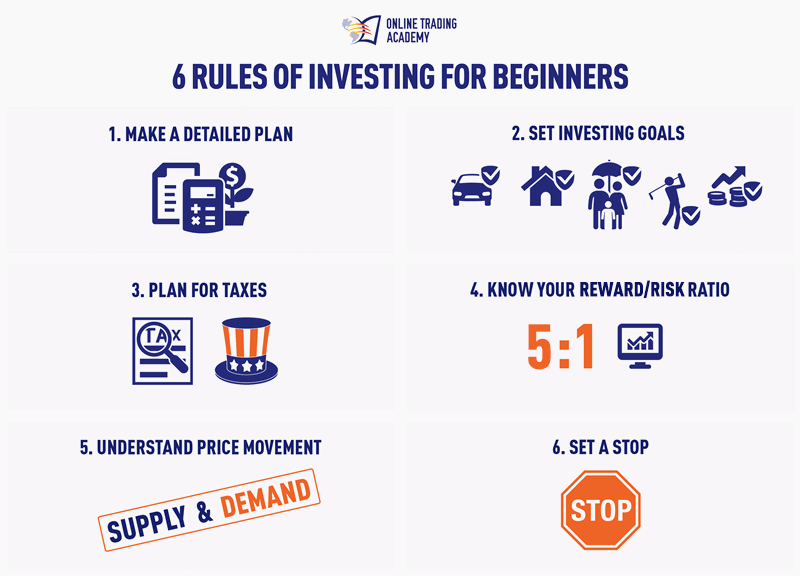
Paying off debt is a significant accomplishment, but it's just the first step towards achieving long-term financial health. Investing for the future is crucial to building wealth and securing your retirement. By starting to invest early, you can take advantage of time and make your money work for you.
Compound interest is a fundamental concept in investing, where your earnings generate even more earnings, creating a snowball effect. For example, if you invest $1,000 with a 5% annual return, you'll earn $50 in interest in the first year, and then 5% of $1,050 in the second year, and so on. This concept can help your investments grow exponentially over time.
Diversification is another key concept in investing, which involves spreading your money across different asset classes, such as stocks, bonds, and real estate. This helps to minimize risk and increase potential returns. A simple way to diversify is to invest in a mix of low-cost index funds or ETFs, which track a specific market index, such as the S&P 500.
To get started with investing, you'll need to choose a brokerage account or find a financial advisor. Here are some options to consider:
- Online brokerage accounts, such as Fidelity or Vanguard, which offer low fees and a range of investment products
- Robo-advisors, such as Betterment or Wealthfront, which provide automated investment management and low fees
- Financial advisors, who can offer personalized investment advice and guidance
When choosing a brokerage account or financial advisor, consider factors such as fees, investment options, and customer support.
Risk management is also essential in investing, which involves assessing your risk tolerance and adjusting your investments accordingly. For example, if you're conservative, you may want to allocate more of your portfolio to bonds or other low-risk investments. On the other hand, if you're more aggressive, you may want to allocate more to stocks or other higher-risk investments.
Ultimately, investing for the future requires patience, discipline, and a well-thought-out plan. By starting early, being consistent, and staying informed, you can achieve your long-term financial goals, including retirement savings and other investment objectives. Remember to review and adjust your investment plan regularly to ensure you're on track to meet your goals.
Frequently Asked Questions (FAQ)
What is the most effective side hustle for paying off debt?
When it comes to paying off debt, having a side hustle can be a game-changer. The most effective side hustle is one that aligns with your skills, interests, and available time, allowing you to generate significant income without burning out. By leveraging your existing abilities, you can create a side hustle that feels less like work and more like a hobby.
To get started, consider your areas of expertise and what you enjoy doing in your free time. For example, if you're a skilled writer, you could offer your services as a freelance writer or editor, while a crafty person might start an online store selling handmade goods. This alignment of skills and interests will help you stay motivated and focused on your debt repayment goals.
Some popular side hustles for debt repayment include:
- Freelance work, such as writing, designing, or consulting
- Selling products online, through platforms like Etsy or eBay
- Ride-sharing or delivery driving, using apps like Uber or DoorDash
- Pet-sitting or house-sitting, which can be a fun and flexible option
- Tutoring or teaching, either online or in-person
These side hustles can be scaled to generate significant income, allowing you to put more money towards your debt each month.
As you explore different side hustle options, remember to consider your available time and schedule. You may need to start small and gradually increase your hours or commitments as your side hustle grows. By being mindful of your time and energy, you can create a sustainable side hustle that helps you pay off debt without sacrificing your well-being.
How do I avoid burnout while working a side hustle and a full-time job?
When juggling a side hustle and a full-time job, it's essential to prioritize self-care to avoid burnout. This means making time for activities that nourish your mind, body, and soul, such as exercise, meditation, or spending time with loved ones. By doing so, you'll be better equipped to handle the demands of your multiple responsibilities.
To set yourself up for success, it's crucial to set realistic goals and boundaries. This might mean learning to say no to non-essential tasks or delegating responsibilities when possible. For example, if you're working on a side project, consider setting a specific deadline and allocating a fixed number of hours per week to work on it.
Effective time management is also vital to avoiding burnout. Here are some tips to help you manage your time:
- Use a planner or calendar to schedule your tasks and appointments
- Set aside dedicated blocks of time for your side hustle and full-time job
- Take regular breaks to rest and recharge
By implementing these strategies, you'll be able to balance your multiple responsibilities without sacrificing your well-being.
Learning to manage stress is also critical to avoiding burnout. This might involve practicing stress-reducing techniques, such as deep breathing or yoga, or seeking support from friends, family, or a mental health professional. Additionally, make sure to get enough sleep, eat a healthy diet, and engage in activities that bring you joy and relaxation.
Remember, avoiding burnout is an ongoing process that requires effort and dedication. By prioritizing self-care, setting realistic goals and boundaries, and managing your time and stress effectively, you'll be able to maintain your physical and mental well-being while pursuing your passions. With time and practice, you'll find a balance that works for you and allows you to thrive in both your side hustle and full-time job.
Is passive income really a viable path to financial freedom?
Passive income can be a viable component of a financial plan, but it's essential to have realistic expectations. Many people think that passive income is a way to get rich quickly, but it often requires effort and patience to set up and maintain. For example, creating and selling an online course can generate passive income, but it requires initial work to develop the course content.
To achieve financial freedom through passive income, it's crucial to combine it with other strategies like budgeting, saving, and investing. Budgeting helps you manage your expenses and allocate your income effectively, while saving and investing enable you to grow your wealth over time. By combining these strategies, you can create a comprehensive financial plan that helps you achieve your goals.
Some popular forms of passive income include:
- Rental properties, which can provide a steady stream of income through rent payments
- Dividend-paying stocks, which can generate regular income through dividend payments
- Peer-to-peer lending, which allows you to lend money to others and earn interest on your investment
These options can help you generate passive income, but it's essential to research and understand the risks and rewards associated with each option.
It's also important to note that passive income often requires some initial effort to set up, but it can provide long-term benefits. For instance, writing a book or creating a mobile app can generate passive income through royalties, but it requires initial work to develop and publish the content. By being patient and persistent, you can create a stream of passive income that helps you achieve financial freedom.
Ultimately, achieving financial freedom through passive income requires a combination of realistic expectations, patience, and a comprehensive financial plan. By understanding the benefits and limitations of passive income and combining it with other strategies, you can create a path to financial freedom that works for you. With the right mindset and approach, you can generate passive income and achieve your long-term financial goals.